
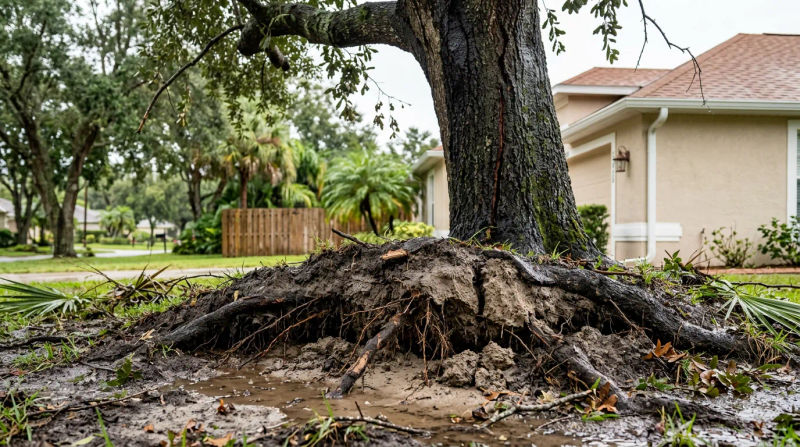
As a tree care specialist with over a decade of experience here in the Ridge Manor area, I’ve seen firsthand what our late hurricane season can do. After weeks of September downpours, you might look out your window and notice something feels… off. That majestic oak that has shaded your yard for years suddenly seems to be leaning just a little more than it did yesterday. It’s a subtle change, but one that can signal a serious and urgent problem brewing just beneath the surface.
Here in Florida, especially with Ridge Manor’s sandy soils, prolonged rain completely saturates the ground. This transforms the firm soil that anchors your trees into a soupy, unstable mess. When the ground loses its grip, even a healthy-looking tree can become a significant hazard. Understanding the warning signs is the first step in protecting your home and family.
Common Signs and Symptoms
When our technicians are called out to assess a potentially hazardous tree, we perform a systematic inspection from the top down. We’re looking for specific unstable tree signs that indicate a tree is losing its footing. Here are seven of the most critical indicators you should watch for, especially after heavy rain.
- A New or Worsening Lean: Many trees have a natural, gradual lean toward sunlight. What we’re concerned with is a sudden change. A tree leaning after rain in Ridge Manor is a classic symptom of root system failure. If a tree that was once upright now has a distinct tilt, or an existing lean has become more pronounced, its structural integrity is compromised.
- Soil Heaving Around Tree Roots: Walk to the base of your tree on the side opposite the lean. Do you see the ground mounding or lifting up? This phenomenon, known as soil heaving around tree roots, is a major red flag. It means the entire root plate is tilting like a dinner plate, lifting the soil on one side as it pulls away from the ground on the other.
- Cracks in the Ground: As the root plate shifts, it puts immense tension on the surrounding soil. Look for cracks in ground near tree trunk, often radiating outwards from the base. These aren't just surface-level drying cracks; they are evidence that the root system is pulling apart underground.
- Exposed or Broken Roots: On the side the tree is leaning towards, you may see roots that were previously buried now exposed. In severe cases, you might even see large, snapped roots. This indicates the tree’s anchor points have failed and can no longer support its weight.
- A Gap Between the Trunk and Soil: A clear sign of instability is when a space opens up between the base of the trunk and the ground. This often happens on the leaning side of the tree. If you can see a visible gap, it means the connection between the tree and its foundation is critically weak.
- New Cracks in the Trunk or Major Limbs: While the primary failure is happening underground, the stress can manifest in the tree's structure. Look for fresh, deep cracks or splits in the trunk or where large branches meet the trunk. This is often a sign the tree is beginning to tear itself apart under its own weight.
- Sudden Increase in Falling Branches: A tree under extreme stress will often start shedding smaller branches and twigs as its systems begin to fail. While some debris is normal, a sudden increase in material falling from the canopy without high winds can indicate the tree is unstable.
What Causes This Problem
Understanding why a tree becomes unstable helps you appreciate the seriousness of the situation. It’s not just one factor, but a combination of elements that create a perfect storm for tree failure, particularly in our local Ridge Manor environment.
- Soil Saturation: The primary culprit is waterlogged soil. Ridge Manor’s sandy soil drains quickly under normal conditions, but during the prolonged, heavy rains of September, it can’t keep up. Water fills all the tiny air pockets in the soil that roots need to breathe and grip. The soil loses its cohesive strength, turning the tree's firm anchor into something more like quicksand.
- Root Plate Failure: A tree doesn’t just stay up via a single taproot. It’s held in place by a complex network of roots and the soil they occupy, known as the “root plate.” This plate can be 30, 40, or even 50 feet across. When the soil is saturated, the bond holding this plate together weakens. Add the force of wind against a full canopy of leaves, and the entire plate can lift and tilt, causing the tree to fall.
- Vulnerable Tree Species: Not all trees are equally susceptible. Here in Florida, we have many species with naturally shallow root systems that are more prone to failure in wet conditions. Shallow-rooted pines and broad-canopy water oaks are common culprits. Their roots spread out near the surface rather than plunging deep, making them less secure when the topsoil becomes saturated.
- Wind Loading: A tree’s canopy, full of leaves, acts like a giant sail in the wind. During the late hurricane season, even a tropical storm that doesn't make direct landfall can bring sustained winds. When these winds push against the canopy of a tree sitting in waterlogged soil, the leverage can be too much for the weakened root system to handle.
When to Call a Professional
Assessing tree stability is a complex task that involves significant risk. From my years of experience, I can tell you that what looks minor to an untrained eye can be a sign of imminent failure. This is not a situation for a DIY diagnosis.
You should contact an experienced professional immediately if you observe any of the following:
- A noticeable new lean, especially after a storm or heavy rain.
- Any sign of soil heaving or mounding at the base of the tree.
- Visible cracks in the soil radiating from the trunk.
- A gap forming between the soil and the base of the tree.
When you call for a professional assessment, trained crews follow a standardized process to ensure nothing is missed. Our technicians will conduct a thorough visual inspection of the tree and its surrounding environment. We examine the canopy, trunk, root flare, and the ground for all the unstable tree signs mentioned above. We can often determine the level of risk and recommend a course of action.
In some cases, a tree might be saved with cabling or bracing, but when there is significant root plate failure, removal is often the only safe option to protect your home and property. An experienced professional can help you make that determination and has the equipment and expertise to perform the removal safely and efficiently.
Conclusion
The heavy rains of September in Ridge Manor create hazardous conditions for trees, turning stable soil into an unreliable anchor. A tree that has stood for decades can become a danger in a matter of days. Paying close attention to the signs of instability - especially a new lean, soil heaving around tree roots, and cracks in ground near tree trunk - is crucial for your safety.
Don't wait and hope for the best. The forces at play are immense, and a falling tree can cause catastrophic damage. Being proactive is the best and only defense against this type of hazard. If you notice any of these signs, your next step should be to get an expert opinion.
If you notice any of these signs, contact a local Tree Service professional for an inspection.