
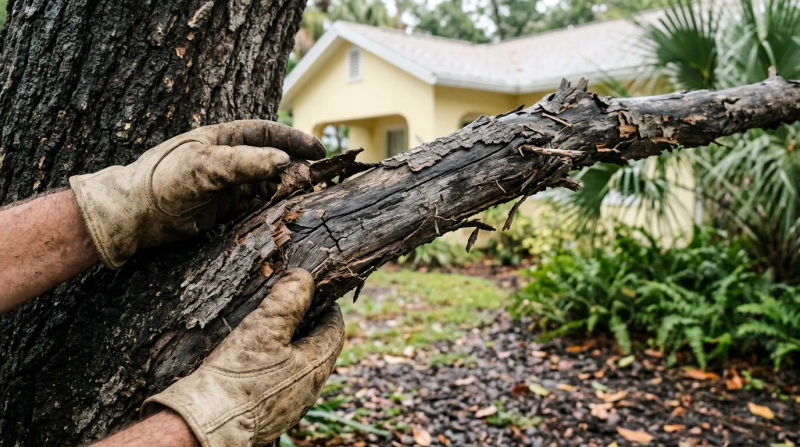
As a tree care specialist with over a decade of experience, I’ve seen firsthand how easily a beautiful, mature tree can become a liability. You might be relaxing on your porch after a typical St. Petersburg summer downpour, admiring your yard, when you notice it - a large branch high up in your oak or pine that looks bare and gray against the lush green canopy. It might seem harmless now, but with September’s late-season winds and the ever-present threat of a hurricane, that single dead limb can become a significant hazard.
Many homeowners overlook these subtle signs, but understanding what to look for is the first step in protecting your property. Deadwood is more than just an eyesore; it’s a ticking clock, and in a coastal area like St. Petersburg, the wind and rain can speed up that clock without warning.
Common Signs and Symptoms
Knowing how to spot deadwood in tree canopy is a crucial skill for any property owner. From the ground, it can be difficult to assess the health of branches high above, but there are several clear indicators our technicians are trained to look for during an inspection. These are the primary deadwood removal warning signs you should be aware of.
- No Leaves or Buds: The most obvious sign. A branch that fails to produce leaves in the spring or drops its leaves significantly earlier than the rest of the tree is likely dead or dying.
- Peeling or Missing Bark: Healthy branches have a layer of bark that is relatively intact. Dead limbs will often have bark that is cracking, flaking off, or missing entirely, exposing the smooth, bare wood underneath.
- Fungal Growth: The appearance of mushrooms, shelf fungi (conks), or other fungal bodies on a branch is a definitive sign of decay. Fungi feed on dead organic material, so their presence means the wood is no longer alive and is actively decomposing.
- Brittle Twigs: If you can safely reach a smaller branch, try bending it. A living twig will be flexible, while a dead one will be dry and snap easily.
- Cracks and Splits: Look for deep cracks that run along the length of the branch or at the point where it connects to the trunk (the branch collar). These are structural weaknesses that make the limb prone to failure.
- Color Changes: Dead branches often appear lighter in color - gray, pale, or bleached - compared to the rich browns and greens of healthy, living wood.
- Increased Insect Activity: Wood-boring insects like carpenter ants and termites are drawn to decaying wood. While not always visible from the ground, an increase in this type of insect activity around the base of the tree can indicate a problem higher up.
What Causes This Problem
Deadwood is a natural part of a tree's life, but understanding the cause can help you anticipate future issues. Limbs don't just die without reason; there's always an underlying cause, and in our region, the environment plays a big role.
- Natural Pruning (Shading Out): As a tree grows, its upper canopy expands, shading out the lower and inner branches. Deprived of sunlight, these branches can no longer photosynthesize effectively. The tree strategically cuts off water and nutrients to them, allowing them to die and eventually fall off. This is a normal, healthy process, but the dead limbs still need to be managed.
- Storm Damage: This is a major factor for dead limbs in St. Petersburg, FL. The strong coastal winds and heavy rains from summer storms or hurricanes can fracture branches. A limb might not break off completely but can be damaged enough to disrupt the flow of nutrients, causing it to die over the following weeks or months.
- Disease and Pest Infestation: Fungal diseases and insect infestations can target specific branches. Pests like wood borers can girdle a limb by tunneling under the bark, cutting off its vascular system. Diseases can infect a branch and cause localized decay, leading to its death.
- Environmental Stress: Periods of drought, soil compaction from foot traffic or construction, or root damage can put the entire tree under stress. To survive, the tree may sacrifice certain limbs to conserve water and energy for its core systems.
- Lightning Strikes: A lightning strike can superheat the moisture within a branch or a strip of the trunk, causing the wood to die instantly. Even if the rest of the tree survives, the damaged sections will become hazardous deadwood.
When to Call a Professional
While it might be tempting to handle deadwood removal yourself, it is one of the more dangerous tree care tasks. A small, low-hanging twig that you can reach from the ground and snip with hand pruners is generally safe for a homeowner to remove. However, the risk escalates quickly with size and height.
You should always call an experienced professional if the deadwood:
- Requires a ladder or climbing. Working at height with sharp tools is extremely dangerous without proper training and safety equipment.
- Is larger than two inches in diameter. Larger limbs are heavy and can behave unpredictably when cut, posing a risk to you and your property.
- Is located over your home, driveway, patio, or utility lines. The potential for costly damage is immense. This is especially true for the historic homes found in many St. Petersburg neighborhoods. Properties from the pre-1940s, with their beautiful American Craftsman bungalows, often feature low-pitched roofs and wide, inviting front porches. These architectural elements are particularly vulnerable to damage from falling limbs.
Our trained crews use standardized processes and specialized rigging equipment to control the descent of large branches. We can carefully dismantle and lower heavy limbs piece by piece, ensuring nothing is left to chance. An experienced arborist won't just remove the obvious dead branch; they will perform a thorough inspection of the entire canopy to identify other potential hazards you may have missed. This comprehensive approach is key to ensuring long-term safety.
Conclusion
Identifying and managing deadwood is a non-negotiable part of responsible tree ownership, especially in a place like St. Petersburg where wind and weather are a constant. Those bare branches high in your tree canopy are not just an aesthetic issue; they are accidents waiting to happen. By learning to spot the common signs - from missing bark and fungal growth to brittle twigs - you can take a proactive stance on safety.
Don't wait for a late-season storm to show you which limbs are compromised. Addressing the issue early prevents property damage, protects your family, and often proves less costly than an emergency cleanup. Take a walk around your property today and give your trees a careful look.
If you notice any of these signs, contact a local Tree Service professional for an inspection. They have the expertise and equipment to assess the situation and safely perform the necessary deadwood removal.