
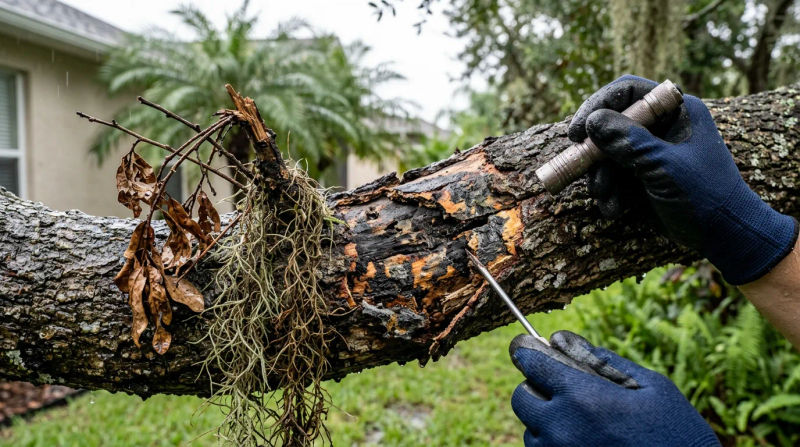
Another September downpour has just passed through, leaving the air thick and the ground soaked. As you walk your property, you might notice a scattering of small twigs and leaves, a normal sight in Orlando after a gusty rain shower. But then you look up and see it - a jagged branch, stripped of its leaves, hanging precariously from your big oak tree. Or maybe you spot a limb in your laurel oak that just looks… wrong. It’s a common scene here, where our long, hot growing season creates dense canopies that can easily hide problems until our late hurricane season weather exposes them.
Over my 12 years caring for trees in this region, I’ve seen how quickly a seemingly healthy tree can reveal hidden dangers. Those brittle, lifeless branches are known as deadwood, and they are more than just an eyesore. They are a liability waiting to happen. Understanding how to spot them is the first step in protecting your home and family.
Common Signs and Symptoms
Identifying deadwood can be tricky, especially in the dense foliage of a Florida summer. However, once you know what to look for, the signs become much clearer. Our technicians are trained to spot these subtle clues from the ground during a routine inspection. Here are some of the most common indicators that you have dead branches in trees Orlando that require attention:
- Bare Branches in a Full Canopy: This is the most obvious clue. If it’s the growing season and one branch has no leaves while the rest of the tree is lush and green, that limb is almost certainly dead or dying.
- Missing or Peeling Bark: A tree’s bark is like its skin; it protects the vital transport tissues underneath. When you see large patches of bark peeling away or missing entirely, exposing the smooth wood beneath, it’s a strong sign that the branch is no longer alive.
- Fungal Growth: The appearance of mushrooms, shelf fungi, or other fungal bodies on a branch is a definitive sign of decay. Fungi are nature’s recyclers, and their presence means they are actively breaking down dead wood tissue.
- Cracks and Splits: Look for deep cracks that run along the branch. While some surface-level fissures are normal, significant splits indicate structural weakness and decay, often originating from the point where the branch joins the trunk.
- Brittle, Lifeless Twigs: If you can safely reach a smaller branch, try bending it. A live branch will be flexible, while a dead one will be dry and snap easily. The inside of a dead branch will look dry and pale or discolored.
- Discoloration: Dead branches often appear darker or paler than the surrounding healthy limbs. This change in color is a result of the wood drying out and beginning to decay.
- Hanging Limbs: After a storm, it’s common to see broken branches caught in the upper canopy. These are often called “hangers” or “widow-makers” for a good reason. These hanging limbs after storms Orlando are extremely dangerous as they can be dislodged by a slight breeze at any time.
What Causes This Problem
Deadwood is a natural part of a tree’s life cycle, but certain factors can accelerate the process and increase the volume of dead branches in your canopy. Understanding the cause can help you anticipate future issues.
First, there’s natural self-pruning. Trees are efficient systems. As a canopy grows denser, lower and interior branches that don’t receive enough sunlight to photosynthesize effectively will be sealed off by the tree and allowed to die. This is the tree conserving energy for more productive growth. In a forest, these branches fall and decompose. In a residential yard, they become a hazard.
Storm damage is a major contributor here in Central Florida. High winds can twist and crack a branch without completely breaking it off. This damage can disrupt the flow of water and nutrients, causing the limb to die over the following months. The heavy, saturating rains of September add immense weight to the canopy, putting extra stress on these already weakened points.
Pests and diseases are another primary cause. Wood-boring insects can tunnel through a branch, destroying its vascular system. Fungal diseases like cankers can girdle a branch, cutting off its life support. In Orlando’s humid climate, these issues can spread quickly if not managed.
Finally, the age and history of the property play a significant role. Many beautiful Orlando neighborhoods feature homes built in the 1950s. These properties are known for their spacious lots and gorgeous, mature trees that were planted decades ago. A 70-year-old laurel oak or water oak is a magnificent sight, but it has had a long life of weathering storms and fighting off pests. It’s almost guaranteed to have accumulated a significant amount of deadwood over the years. Regular maintenance is key for preserving these legacy trees and ensuring they don’t pose a risk to the classic Ranch-style homes they shade.
When to Call a Professional
Knowing when to remove deadwood Florida trees is a question of safety and scale. While it might be tempting to handle a dead branch yourself, it’s one of the more dangerous tree maintenance tasks for a homeowner.
Any deadwood that is small enough to be snapped off by hand or reached with a small pole pruner from the ground can be considered a minor DIY task. However, the moment a ladder or a chainsaw is involved, it’s time to call for professional help. The risks of working at height, combined with the unpredictable nature of a partially detached limb, are too great.
Our crews follow strict, standardized safety protocols for every deadwood removal job. We use specialized rigging equipment to carefully lower heavy limbs, ensuring no damage to your home, patio, or landscaping below. This organized workflow is something you cannot replicate without the right training and gear.
You should call an experienced professional if you notice:
- Branches thicker than your wrist: These are heavy enough to cause serious injury or property damage if they fall uncontrollably.
- Deadwood high in the canopy: This requires a trained climber with safety rigging to access and remove it safely.
- Limbs located over structures: Any deadwood above your roof, driveway, deck, or children’s play area is a high-priority hazard that needs immediate professional attention.
- Widespread dieback or signs of major decay: If you see fungus on the main trunk or multiple large dead limbs, it could indicate a more serious health issue with the tree. A certified arborist can provide a full diagnosis.
Proactive removal is always the best strategy. Don't wait for a branch to fail during the next thunderstorm.
Conclusion
In Orlando, our trees are a defining feature of our landscape, providing much-needed shade and beauty. But their health and stability can’t be taken for granted, especially during the volatile late-summer storm season. Regularly scanning your canopy for leafless branches, peeling bark, and other signs of decay is a crucial habit for any homeowner.
Remember that deadwood is not just a cosmetic issue; it’s a direct threat to your property and safety. While small twigs are manageable, larger limbs and those high in the canopy require the expertise and equipment of a trained crew. Acting early to address dead branches in trees Orlando is a wise investment in the long-term health of your trees and the security of your home.
If you notice any of these signs, contact a local Tree Service professional for an inspection. They can assess the situation and recommend the safest course of action.